Saturday, November 16, 2013

GM's Liability for Mesothelioma Claims, Much More Than Original Estimate

In an attempt to decipher the extent of liability General Motors Corp will be under with mesothelioma claims, creditors sought out and received information from the company and other entities. This information was obtained with permission from U.S. Bankruptcy Judge Robert Gerber, in NY.
With this information available to creditors, they will be able to determine how significant their bankruptcy is and may possibly be able to move out of bankruptcy. Motors Liquidation Co., the last portion of GM remaining in bankruptcy, plans to form a trust fund for future asbestos claimants. The creditors are able to demand documents from asbestos trusts established from other companies to help them estimate future mesothelioma claims. The trusts they are investigating currently have funding of $30 billion to $60 billion. Being able to view this information is essential for moving the company out of bankruptcy.

In response to testimony about the fears of personal information being misused or disclosed, Judge Gerber said, "This isn't like the formula for Coke or nuclear launch codes." Under the judge's order, mesothelioma attorneys and the creditors must keep information about claim holders' age, work history, and diagnosis confidential.
Despite fears that personal information could be misused, the information available to creditors can help them better prepare to make monies available to mesothelioma victims. Mesothelioma is an incurable cancer caused by exposure to asbestos and GM's brake linings contained the deadly particles that cause thousands and thousands of individuals to be sick.
During the 1990s, asbestos claims against GM were less than $2 million a year but by the mid-2000s the annual figure dramatically rose to an average of $30 million. To add to those figures, from 2000 to 2008, GM saw an average of 850 new mesothelioma claims against them per year. Because of the latency period of asbestos exposure causing mesothelioma, it may take up to 50 years for people to develop symptoms. This means that new cases will be cropping up anytime soon and the judge's ruling will allow GM to prepare for future liability.


A Mesothelioma Claim Can Help Asbestos Victims


An individual, who has developed mesothelioma as a result of a personal injury caused by asbestos exposure, can file a mesothelioma claim through a compensation lawsuit. In the majority of all cases, a victim of exposure to asbestos files the claim against the party who is allegedly responsible for his personal injury.
The defendants in such lawsuits are typically manufacturers, employers, asbestos removal contractors or even government organizations. Or basically any party that can be proven guilty of negligence or misconduct which caused the harmful asbestos exposure. A recently conducted study suggests that over six hundred thousand mesothelioma claims were filed in the United States.

A compensation claim can be filed not only by the diagnosed person, but also by his family members in case the victim has already passed away. Mesothelioma claims have the objective to recover monetary compensation for medical expenses related to the asbestos exposure, the loss of wages or the ability to make a living, disability, as well as psychological and emotional suffering. Before filing an asbestos claim, you should take the following things into consideration: The statute of limitations, which may differ from state to state, restricts the amount of time a claimant has to put his case forward. It is important to understand, that because of the long latency period of all asbestos induced diseases, this statute begins at the point of when a mesothelioma diagnosis has been made, rather than the initial contact to the hazardous material.

Seeking Mesothelioma Compensation

Mesothelioma compensation is awarded to the plaintiff when the defendant in such a suit admits or is found liable causing the disease. Seeking such compensation should always be of primary concern to those afflicted with this form of cancer. Yet, many do not seek their just compensation. Why is this? A common misconception about mesothelioma or other medical related lawsuits is that they are intended to seek "revenge" for being made ill. Such an assessment is an obtuse one on many levels. The reason the afflicted seek a settlement or judgment is because of the enormous costs associated with suffering from the disease.
Mesothelioma is a serious condition as it is a form of cancer derived from exposure to asbestos. Often, the exposure is derived from negligence. One form of negligence would be a building's owner or management did not properly screen for mesothelioma and those in the building suffered from exposure. It is also not without precedent that those working in asbestos removal suffered from their exposure due to faulty protective equipment.
Regardless of the reason the exposure, mesothelioma is life threatening. To send mesothelioma into remission will require all manner of financial costs. This is the main reason why mesothelioma compensation needs to be sought after - the fees associated with medical bills need to be covered. Without the best of care, it would become much harder to reverse the condition.

Saturday, November 9, 2013

Treating Lung Cancer With Chemotherapy

There are two main types of lung cancer, non-small cell lung cancer (NSCLC), which is the most commonly diagnosed in patients, and the faster growing more aggressive small cell lung cancer (SCLC), which makes-up for between 10 - 15% of all lung cancer cases diagnosed.
Non-Small Cell Lung Cancer - consists of three types: squamous cell carcinoma, adenocarcinoma, and large cell carcinoma, where various treatment options are available depending on its staging: biologic therapy, chemotherapy, radiation therapy (high-energy rays of light used to kill cancer cells by damaging their DNA and hindering their ability to both grow and divide), and surgery.
Small Cell Lung Cancer - consists of two types, small cell carcinoma (oat cell cancer), and combined cell carcinoma, where treatment options usually consist of: chemotherapy, laser therapy (a small beam of light used to burn and kill cancer cells), photodynamic therapy (a light used to activate drugs that kill cancer cells), radiation therapy, and surgery.
However, chemotherapy which has been around for some 70 years, is still the most widely used treatment for lung cancer. Dating back to the Second World War, chemotherapy was once used as a chemical warfare weapon; however, today chemotherapy has evolved from a one chemical killer, to a 100 plus drug Saviour.
Chemotherapy works by destroying cancer cells and stopping their spread with the use of a combination of drugs, and is something that has shown an acceptable amount of success throughout the years. However, chemotherapy tends to cause unwanted side-effects too, as not only are the bad cells destroyed, but also a considerable amount of damage is caused to the healthy ones.
Damage to the healthy cells in bone marrow (that make blood), the stomach, the alimentary canal between the stomach and the anus, the mouth and the hair, are all common side-effects suffered by patients. Although many of these side-effects are usually temporary, they can be quite horrific, which can also contribute to a negative effect on the patient.
Damage to the healthy cells around the hair follicles, usually results in alopecia (hair-loss), which for many can seriously damage their self-confidence, and is probably one of the most associated side-effects of chemotherapy. Also chemotherapy treatment can send signals to the brain telling the body to vomit, together with irritations in the stomach that cause the sensation of nausea.
The constant sensation of nausea, anemia ([low red blood cell count] causes the patient to feel weak and tired), neutropenia ([low white blood cell count] can leave the patient open to infection), and trombocytopenia ([low pateletes] cell fragment found in the blood that cause bleeding and bruising), are all things that can affect the patient.
Although chemotherapy treatment can cause harmful side-effects to many patients, they are usually a lot less severe than those caused by the lung cancer if left untreated. However, continual research and development is helping chemotherapy to improve with the use of new drugs, and its combination with other treatments, to make it an even more powerful weapon.

What Organs Are Affected by Lung Cancer?

As lung cancer is seldom diagnosed while at an early stage, and usually only by accident after a doctor has ordered a routine chest X-ray for another health issue, other vital organs in the body have already been affected by metastasis (its spread). It is quite common for 25% of all lung cancer sufferers to show no signs at all of having lung cancer present.
Unfortunately for many, the damage that has been caused to these organs is usually permanent. As the disease develops, metastasis is usually found not only in regional tissue, but in distant tissue too, allowing for it to move with relative ease throughout the body while infecting whatever gets in its way. Organs commonly affected by lung cancer are:
The Liver - Often the liver and adrenal glands (endocrine [glands that secrete hormones directly into the blood, and not through a duct] that sit at the top of the kidneys) are affected over a considerable amount of time without any noticeable symptoms to the sufferer.
The Brain - Usually the first symptoms that the brain has been affected by lung cancer metastasis is when the sufferer begins to have visual problems, memory loss problems, headaches, a noticeable loss of strength, or a partial seizure has occurred.
The Bones - When the bones have been affected, usually a noticeable discomfort will be present either in the vertebrae (backbone), or the ribs and thighs. Although these symptoms may be present much more earlier on, they usually either go unnoticed, or just get put down to the after-effects of something else.
The Nerves - Also prone to lung cancer metastasis are the nerves, when affected can cause many sufferers to experience aching pains in the shoulders that may also run along the outer-side of either arm.
The Vocal Cords - When the esophagus (the conduit that connects the mouth and stomach) has been affected, a sufferer may experience difficulty in swallowing. Often, this is when part of the lung has collapsed, resulting in an infection in the lung that can be extremely difficult to treat.
General Symptoms - When more organs in the body have been affected, a lack of appetite, weight loss (usually occurring when no exercise or dietary regime has been put in place), bleeding, and blood clotting may be noticed. Often when these symptoms are present, they easily go unnoticed due to being similar to the after-effects of other less serious illnesses.
However, if symptoms are persistent, it is always prudent to get them checked out by a doctor as soon as possible, as when lung cancer has metastasized to other vital organs in the body, a patients 5-year prognosis after diagnosis, is usually very poor.

What to Expect After Having a Lung Removed

One of the first questions that may come to mind when someone has been advised that the best option for survival is to have a lung removed, is "How can someone live with just one lung?" But there are in fact a large number of people out there who have no other choice but to live with just one lung.
Most patients after having had a lung removed will be inclined to suffer from certain side-effects, although these may vary between patients. The side-effects of the surgery itself, together with those of chemotherapy and radiation therapy can be quite intense, although for most they are usually short-lived.
After the lung operation has taken place, help may be required for the patient to adjust to his/her new life-style. There are people and organizations on-hand specially trained to offer this type of help. Social workers, and cancer help organizations are two such sources of help available where there is usually no cost involved for the patient at all.
Usually they are able to help with the basic things, such as: arranging transport that may be required for going backwards and forwards to the hospital for after-op treatment, a nurse may be needed, grants for mobility-aids (wheel chair), heating costs, general household expenses, etc. They can in fact be a Godsend for those who choose to use them.
If the patient gets past the first 12 months, much of the healing that can be done, has already been done, and life can start getting back to as normal as possible. Although, life will never be the same again, as it will be much more limited in the things that a patient can do compared to before the operation took place.
There are many reasons why someone may have had their lung removed, although 90% of the time it is associated with lung cancer which is usually related to smoking. When this is the case, the prognosis of the after-op lung patient is usually quite short; however, certain factors must first be taken into consideration before any assessment as to the patient's expected quality of life, and life-expectancy can be given.
These may include: the reason why the lung was removed, the age and gender of the patient, if a transplant lung was used, how healthy the remaining lung was at the time of the operation, the general health of the patient, how well the patient respond to treatment, etc.
These are all factors that can have some bearing on what will happen to the patient after surgery; although, it is quite common for treatment and check-ups to continue for the rest of the patient's life, whatever the reason.
Philip was born in the United Kingdom. Today he works as a freelance writer in Mexico, where he spends much of his time researching and writing about health related issues. If you feel that you have benefited from reading one of his articles: please recommend them to others who may also benefit. Thank you for reading Philip's articles!

The Mesothelioma

What is Mesothelioma?
Mesothelioma is a rare form of cancer in which malignant cells are found in the sac lining of the chest or abdomen. Especially people who are diagnosed with malignant mesothelioma in this work that breathing asbestos.
Mesothelioma Diagnosis
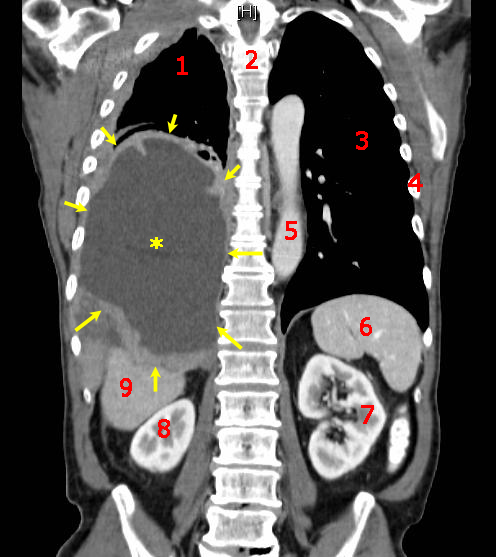
For the diagnosis of this disease, a physical examination is performed, followed by x-rays and pulmonary function tests as well, if necessary. If the diagnosis is mesothelioma, the X-ray may reveal pleural effusion frequently observed after exposure to asbestos.
Cause mesothelioma
One concept is that the irritation and inflammation of mesothelioma cells is caused by asbestos. Irritation and inflammation may lead to cell damage, cancer and finally irreversible scarring. The second assumption is that the asbestos fibers are separated from the regular routine function of cellular structures holding cell division. This cell division is necessary because it causes cell changes that may lead to cancer. The second theory is that the last production of DNA-damaging compounds is caused by asbestos oxidant. Finally, incompetence production has been shown to be there due to the presence of asbestos. Concertinas can cause ignore mesothelial cell division routine that leads to development of cancerous cells. As a result, the common output of these four concepts is ignorance of standard cell division cycles, which over time can cause cancer.

Some industries that are out there that workers inhaled asbestos and mesothelioma sufferers. Most of these workers are men who are over the age of 40.
Some of these industries are: - manufacturing, shipbuilding, miners, soldiers, engineers, pipe fitters, using steel, automotive engineers and construction workers.
Symptoms of Mesothelioma
Pleural effusion - This is when too much fluid builds up in the lining of the lungs because a person can suffer dispense and chest pain.
Coughing up blood - is one of the more alarming symptoms of the 10. In this a person may have difficulty swallowing or hardness.